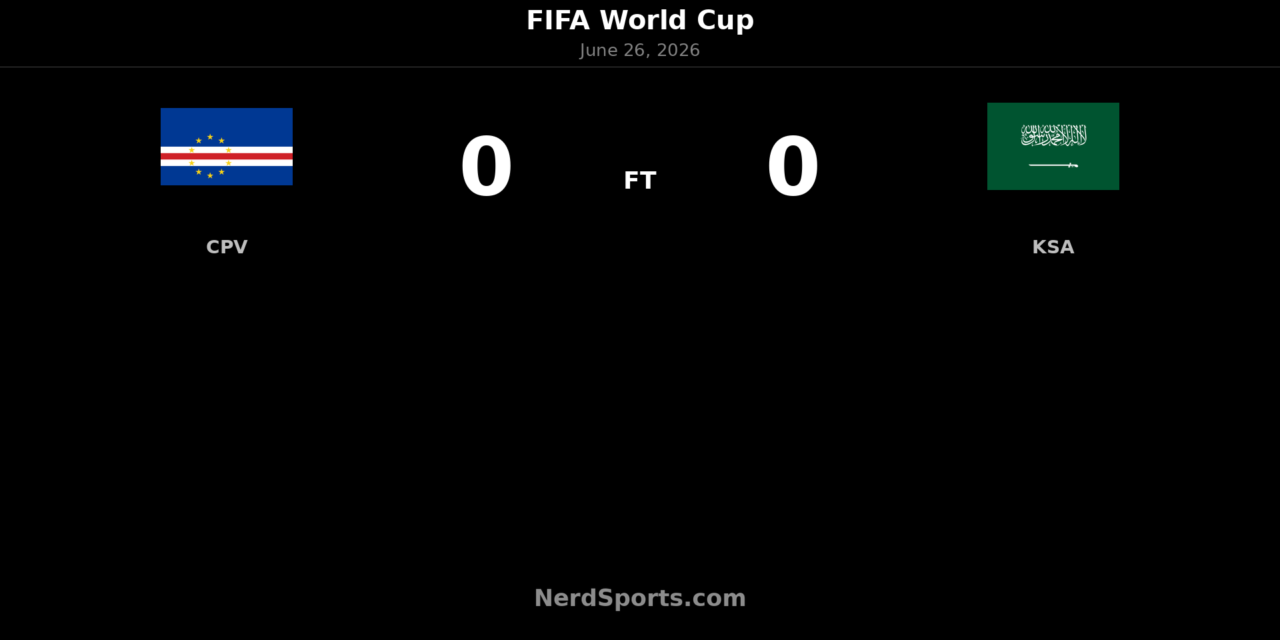
Cape Verde and Saudi Arabia played out a 0-0 draw in the FIFA World Cup 2026 on Friday night, with neither side able to find the decisive moment at NRG Stadium. In a tense Group H fixture, the pivotal theme was missed attacking opportunities rather than a defining goal scorer.
The final result reflected a match that was competitive, cautious and often interrupted by fouls at key stages. Cape Verde saw slightly more of the ball, finishing with 51.2 percent possession, and they carried the greater attacking volume with 15 total shots to Saudi Arabia’s seven. Even so, clear openings were limited, and both defenses stayed compact when it mattered most.
The first signs of the match’s combative edge arrived early. Saudi Arabia right-back Saud Abdulhamid went into the book in the 4th minute, and Cape Verde’s Wagner Pina followed with a yellow card in the 9th. Those early cautions set the tone for a fixture that never fully opened up, with challenges regularly breaking rhythm and forcing both teams to build patiently.
Cape Verde were the more proactive side for long stretches, especially in their use of wide areas and second balls around the Saudi box. Their four corners and 12 shot assists underline how often they worked the ball into promising positions. The problem was the final touch. Despite generating 15 attempts, Cape Verde managed only two shots on target, a sign of Saudi Arabia’s disciplined shape and timely pressure around the penalty area.
Saudi Arabia, meanwhile, offered less in volume but perhaps a little more efficiency when chances did come, putting three of their seven attempts on target. Still, they struggled to sustain pressure for long periods. Their attacking phases were often isolated, and Cape Verde did a solid job of cutting off passing lanes into central areas. Nasser Al-Dawsari’s yellow card in the 67th minute was another reflection of Saudi Arabia trying to disrupt transitions as the contest became increasingly stretched.
As the second half wore on, both managers appeared aware of the balance between pushing for victory and avoiding a costly late mistake. That caution was especially evident in the closing stages. Saudi Arabia’s Feras Al-Brikan picked up a yellow card in the 90+3rd minute as frustration and urgency rose, but neither side could convert late pressure into a breakthrough before the final whistle at 90+5.
Key performers
While there was no goal scorer to headline the night, Cape Verde’s overall team structure stood out. They controlled slightly more possession, created more shooting situations and kept Saudi Arabia to just two corners. On the other side, Saudi Arabia’s back line deserves credit for preserving the clean sheet under sustained pressure, particularly with Cape Verde repeatedly probing from advanced areas.
If there was a standout individual, Wagner Pina was heavily involved in a demanding wide battle despite his early booking in the 9th minute. For Saudi Arabia, Saud Abdulhamid also had to navigate an early yellow card from the 4th minute while helping his side come away with a valuable point.
NerdSports Stat: Cape Verde attempted more than twice as many shots as Saudi Arabia, 15 to 7, yet Saudi Arabia still finished with more shots on target, 3 to 2.
The draw leaves Group H finely balanced, with both teams taking a point from a match that could still matter significantly in the race to reach the knockout stage. Cape Verde may feel they left two points behind after producing more of the attacking play, while Saudi Arabia can point to their defensive organization and resilience. Attention now turns to the next round of fixtures, where sharper finishing could make all the difference for both sides.
Frequently Asked Questions
No goals were scored in Cape Verde vs Saudi Arabia.
Cape Verde 0 – 0 Saudi Arabia.
Both teams earned a point in Group H, keeping the table tight and leaving plenty at stake in the next fixture.
Wagner Pina was the standout performer with an energetic display on the right and strong involvement in Cape Verde’s attacking phases.