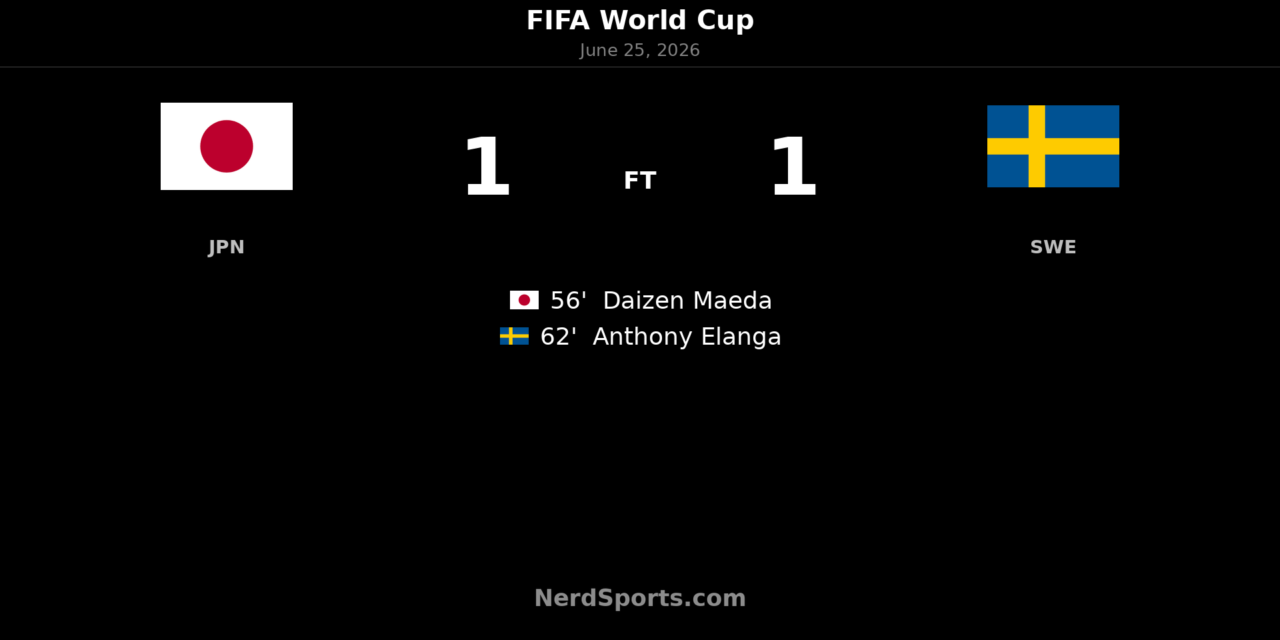
Japan and Sweden played out a 1-1 draw in the FIFA World Cup 2026 on Thursday, with Daizen Maeda putting Japan ahead in the 56th minute before Anthony Elanga replied six minutes later. The point was enough to send Japan through, making Elanga’s quick equaliser the pivotal moment in Arlington.
After a goalless first half, the fixture opened up considerably after the interval at AT&T Stadium. Japan had slightly more of the ball, finishing with 52.3 percent possession, but Sweden carried a steady threat of their own and ended the night with more total shots (10 to 8) and more efforts on target (5 to 3).
The breakthrough arrived in the 56th minute when Daizen Maeda (56′) gave Japan a deserved lead. It was the kind of direct attacking moment Japan had been searching for through a tight opening hour, and for a brief spell they looked in control of both the tempo and the qualification picture in Group F.
Sweden’s response was immediate and impressive. Just six minutes later, Anthony Elanga (62′) brought Sweden level, restoring balance to the contest and forcing Japan to manage the closing stages with far greater care. The equaliser shifted the rhythm of the match, with Sweden pushing from wide areas and continuing to make use of their set-piece pressure, reflected in an 8-2 edge in corners.
The first half had offered warning signs that this would be a contested fixture rather than an open one. Sweden defender Isak Hien was shown a yellow card in the 32nd minute, while Japan substitute Shogo Taniguchi entered the book in the 77th minute as the tension rose late on. Viktor Gyokeres also picked up a yellow card in the 85th minute during a closing spell in which Sweden looked for a winner and Japan focused on seeing out the point they needed.
Tactically, Japan stayed true to their usual approach, circulating possession and looking for sharp movement in advanced areas, while Sweden were happy to play with a little less of the ball and trust their delivery into dangerous spaces. The balance of the statistics underlined how even the contest was: Japan held the possession edge, Sweden had the stronger shot volume, and neither side could find the decisive second goal.
Key performers
Maeda was Japan’s standout attacking figure, not only for his 56th-minute goal but for the energy and urgency he brought to the front line. For Sweden, Elanga made the defining contribution with his 62nd-minute equaliser, a goal that kept his side firmly in the fixture and altered the knockout-round conversation. In midfield and wide areas, Sweden’s work to win eight corners also gave them a platform throughout the second half.
NerdSports Stat: Japan advanced after taking four points from their three Group F fixtures, and this draw came despite Sweden finishing with more shots (10-8), more shots on target (5-3), and more corners (8-2).
The draw leaves Japan moving on from Group F, a result that fits the wider storyline of their composed tournament run. Sweden will feel they produced enough to make life difficult, especially after Elanga’s rapid reply, but the bigger takeaway is Japan doing exactly what was required. With the knockout rounds now ahead, Japan can turn their focus to the next fixture knowing this hard-earned point completed the job.
Frequently Asked Questions
Daizen Maeda (56′) for Japan and Anthony Elanga (62′) for Sweden.
Japan 1 – 1 Sweden.
Japan advanced from Group F with the draw, while Sweden were left needing more from the fixture to improve their standing.
Daizen Maeda was the standout performer with Japan’s 56th-minute opening goal and a lively attacking display.